

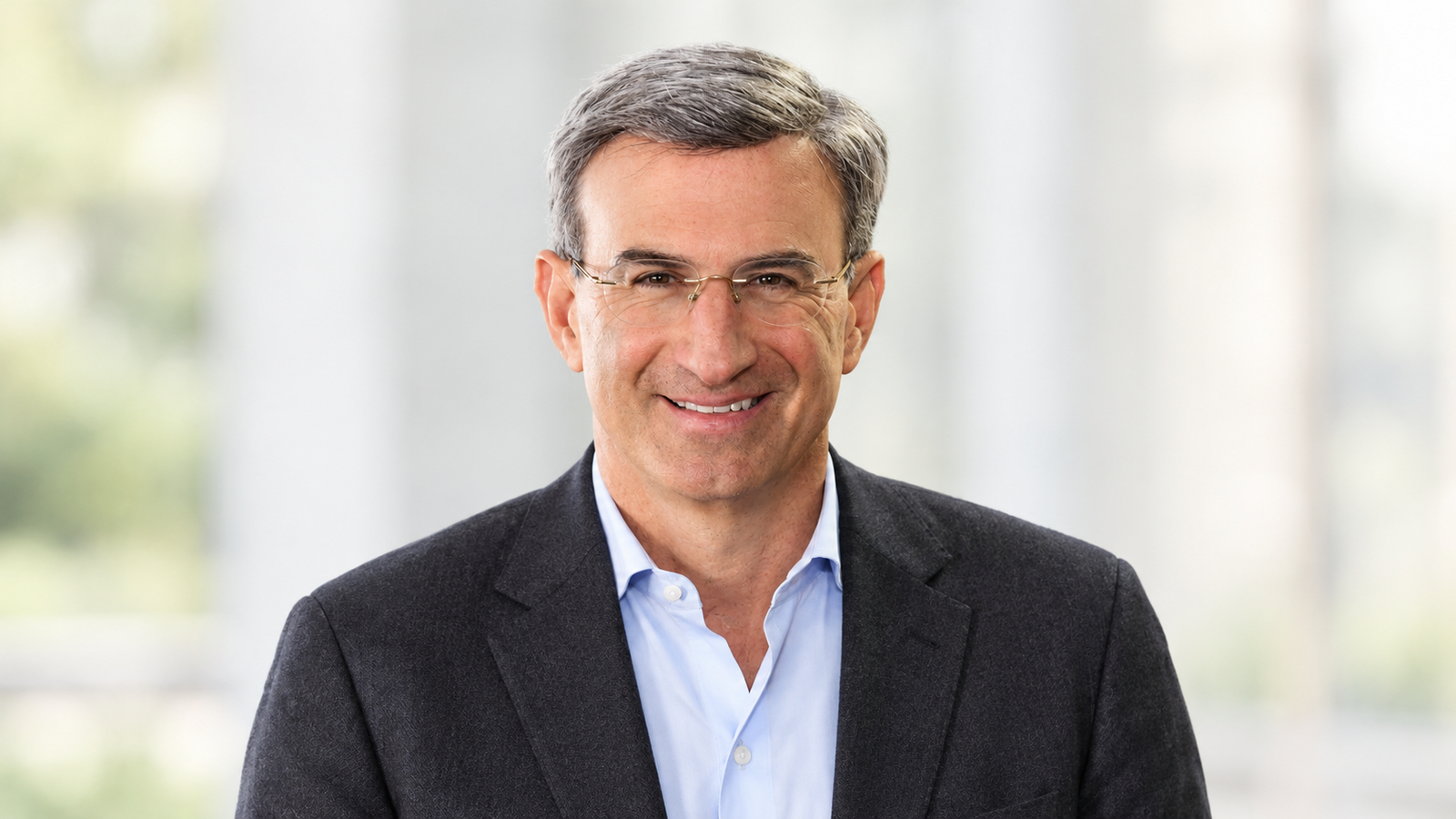
Created with ChatGPT Image Creator. Reference: Peter Orszag 2023 by Hayley Karis, CC BY-SA 4.0. AI-generated composition, clothing and background; adaptation shared under the same licence.

Peter Orszag has worked on a recurring problem in markedly different settings: how people make consequential decisions when the evidence is incomplete, the incentives are imperfect and the outcome matters. His career connects economic research, the Clinton White House, the Congressional Budget Office, President Barack Obama’s budget office and senior positions at Citigroup and Lazard.
As of 4 October 2026, he is Lazard’s chief executive and chairman. He became CEO in October 2023 and added the chairmanship in January 2025. Those jobs followed years running the firm’s Financial Advisory business. His professional record also includes books, retirement-saving experiments and work on the consequences of unequal life expectancy. Understanding that wider record helps explain what he brought to government and what he is now trying to change as a business leader. Lazard’s current biography, 2025 annual report
An academic family and an early interest in public service
Orszag was born in Boston, Massachusetts, on 16 December 1968, according to the biographical statement he supplied for his 2009 Senate confirmation process. Senate nomination record, printed page 55
In a 2021 oral-history interview, Orszag described growing up outside Boston as the middle of three sons in an academically demanding household. His father was mathematician Steven Orszag. Peter attended several schools, including Belmont Hill and Phillips Exeter Academy, before Princeton. His interest in government began well before college. Miller Center oral history, interview one
Two early relationships helped turn that interest into opportunities. An Exeter-linked internship took him to Senator Tom Daschle’s office while he was still in high school. At Princeton, an introductory economics course with Alan Blinder helped redirect his academic interests; Blinder later invited him into the Clinton administration. Orszag’s account gives mentorship and unexpected openings a prominent place in his development, rather than describing a career plotted from the outset.
His father’s scientific career provides another piece of the family context. The Institute for Advanced Study records Steven Orszag’s work on computational fluid dynamics and turbulence and his membership in its School of Natural Sciences in 1966–67. Decades later, Peter would join the same institution’s board of trustees. IAS’s account of the family connection
Education: Princeton, the Marshall Scholarship and LSE
Orszag graduated from Princeton in 1991, summa cum laude in economics. The Marshall Scholarship programme identifies him as a 1991 scholar. Princeton’s alumni record, Marshall alumni directory
His Senate biographical statement records his London School of Economics master’s degree in June 1992 and doctorate in March 1997, as well as his 1987 Exeter diploma. His published CV adds that he earned the master’s with distinction. Senate education record, printed page 55, published CV
His doctoral dissertation was titled Dynamic Analysis of Regime Shifts Under Uncertainty: Applications to Hyperinflation and Privatization. The topic was more specific than a general interest in public finance: it concerned economic decisions when the underlying policy environment can change. His education also overlapped with practical policy work rather than proceeding in isolation from it.
During his London years, economist Richard Layard brought him into advisory work in Moscow. Orszag later recalled working with a team in Russia’s Ministry of Finance amid the problems of post-Soviet transition and hyperinflation. He then entered the Council of Economic Advisers. Miller Center interview
The Clinton years, consulting and teaching
Orszag’s early federal experience included a staff-economist appointment at the Council of Economic Advisers in 1993–94, followed by senior economist and senior adviser roles in 1995–96. In 1997–98, his National Economic Council work included serving as special assistant to the president for economic policy. His portfolio ranged across Social Security, climate policy, macroeconomics and other economic questions. Career chronology in his CV
Government was not his only professional setting before the better-known Obama appointments. He led Sebago Associates, an economics and public-policy consultancy, and taught at the University of California, Berkeley. When Brookings announced his arrival in August 2001, it specifically identified those experiences alongside his Russian-government and White House work. Brookings’s original appointment announcement
Brookings hired him as a senior fellow in Economic Studies. Its announcement described a research agenda centred on Social Security and entitlement programmes, with additional work on budgets, tax policy, poverty, higher education and climate change. This period helped establish the subjects that would later become central to his leadership at the Congressional Budget Office.
Books that show the breadth of his policy work
Orszag’s writing extended beyond short policy papers. With Jeffrey Frankel, he co-edited American Economic Policy in the 1990s, published by MIT Press in 2002. The volume brought academic analysis together with accounts from policymakers and independent observers, asking why decisions were made, what alternatives were considered and what lessons could be drawn. MIT Press identifies it as a CHOICE Outstanding Academic Book for 2002. MIT Press’s book record
With economist Peter Diamond, he wrote Saving Social Security: A Balanced Approach. The first edition appeared in 2004; the updated 2005 edition examined the Bush administration’s proposed individual accounts and competing approaches to benefit calculations. The book set out a reform proposal and an argument for protecting the programme’s function. It should be understood as a contribution to a policy debate, rather than an enacted settlement of that debate. Brookings’s publisher record
He also co-authored Protecting the Homeland 2006/2007 with Michael d’Arcy, Michael O’Hanlon, Jeremy Shapiro and James Steinberg. The book examined security policy, intelligence, infrastructure and coordination among public and private institutions. Its place in his bibliography illustrates a broader interest in how government organises responses to risks that cross institutional boundaries. Brookings’s book description
Retirement saving: testing ideas outside the seminar room
One of Orszag’s most concrete research projects was a retirement-saving experiment carried out with H&R Block. Working with Esther Duflo, William Gale, Jeffrey Liebman and Emmanuel Saez, he studied how matching contributions changed tax filers’ decisions about putting money into individual retirement accounts.
The experiment ran in 60 St. Louis-area offices during March and April 2005. Clients were randomly offered no match, a 20% match or a 50% match. The study’s published results reported participation rates of 3%, 8% and 14%, respectively. The researchers also found that people responded more strongly to this straightforward offer than to a superficially similar tax incentive, suggesting that presentation, assistance and programme design mattered alongside the financial reward. J-PAL’s account of the experiment and published paper
In congressional testimony in May 2005, Orszag connected that kind of evidence to specific proposals. He advocated making 401(k) participation more automatic, allowing taxpayers to split refunds so that some went into retirement saving, improving the Saver’s Credit and reducing confusing benefit-programme rules that discouraged saving. His concern was that responsibility had shifted toward individual workers without making retirement decisions correspondingly easier. Orszag’s original testimony
This is an important part of his biography because it shows what “evidence-based” work meant in practice: a defined question, an intervention tested with real participants and a set of proposals linked to the results. The experiment did not prove that one mechanism could solve every household’s retirement problem. It did provide evidence about a specific obstacle policymakers could address.
Founding the Hamilton Project
Orszag was the Hamilton Project’s founding director. At its public launch on 5 April 2006, he moderated a discussion with then-Senator Barack Obama, former Treasury secretary Robert Rubin and the Reverend Jim Wallis. He also presented the project’s economic vision. The original launch programme
The initiative brought together people from business, academia and public policy to develop proposals for broadly shared growth. Its first policy options addressed teacher quality, retirement saving and educational opportunities for lower-income students. The launch offers a useful snapshot of Orszag’s position before entering the Obama administration: he was already connecting research, practical proposals and a network of people who would play substantial roles in economic policy.
Directing the Congressional Budget Office
Orszag became CBO director in 2007. The office’s job is to provide Congress with budget estimates and economic analysis, including assessments that can complicate the plans of either political party. It was therefore a different institutional responsibility from his earlier work developing policy proposals.
In its November 2008 farewell, acting director Bob Sunshine credited Orszag with expanding CBO’s attention to climate change and health care, particularly the long-term budgetary implications of rising medical costs. Sunshine also described the agency’s work under Orszag as objective and nonpartisan. That is the institution’s contemporary assessment of his tenure. CBO’s farewell statement
Orszag’s own final CBO blog post adds something about how he approached the position. He valued the combination of rigorous analysis, relevance to live decisions and a wide range of subject matter. He also described blogging as another way to discuss the office’s work with the public. On 25 November 2008, after Obama announced his intention to nominate him for the White House budget job, Orszag wrote that he was resigning from CBO. His final CBO entry
Obama’s budget director: recovery and health-care reform
Orszag served as director of the Office of Management and Budget from January 2009 until July 2010. He entered the administration during the financial crisis, when decisions about emergency recovery and longer-term federal finances had to be made together. Lazard’s regulatory biography
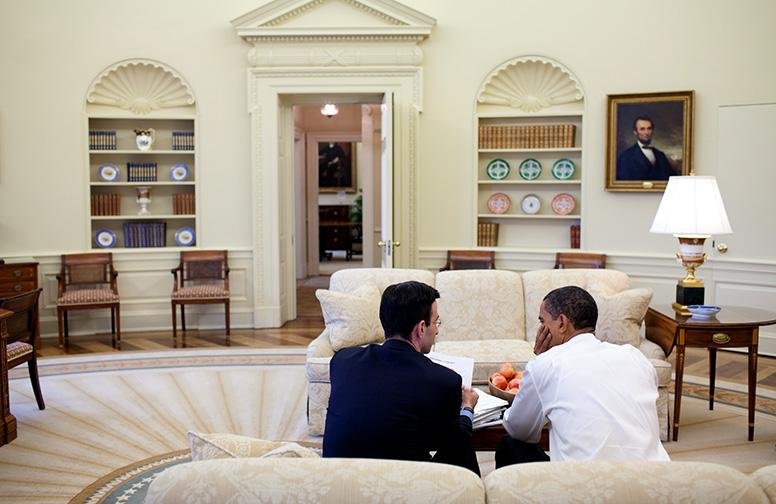

In remarks published by the White House in July 2009, he argued that the Recovery Act needed to support the economy over a sustained period. At the same time, he put health-care spending at the centre of the long-term budget debate. The immediate goal was to support recovery; the longer-term challenge was to change the growth of costs that would otherwise place increasing pressure on the budget. Contemporary White House account
He argued for paying for the quality and effectiveness of care rather than simply the volume of medical services. This helps explain why a budget director became so closely associated with health reform. His role was not limited to adding up the cost of expanded coverage: he was making an argument about the incentives within the health system.
The distinction between CBO and OMB is important here. At CBO, he led an organisation evaluating proposals for Congress. At OMB, he helped formulate and defend the president’s programme. The expertise carried across, but the responsibility changed. His presence in the administration does not make him the sole author of the Recovery Act or the Affordable Care Act, and policy ambitions should not be confused with every later outcome.
The management side, and what he said remained difficult
Orszag’s second Miller Center interview, conducted in April 2022, concentrated on a less visible part of the OMB job: making government work more effectively. He described preparation for the management side of his confirmation process, delays in getting senior management personnel into place and the difficulty of keeping longer-term improvements from being displaced by immediate crises.
He identified performance measurement and funding approaches supported by evidence as priorities, alongside basic agency management and recruiting capable people into government. He also acknowledged limits in assessing his own record. Asked about efforts to bring some contracted work back into government, he said he did not know how much progress had ultimately been achieved and had not seen the evidence needed to judge it. Miller Center oral history, interview two
That admission gives the biography a useful counterweight to lists of titles and policy achievements. It shows an official distinguishing an initiative he supported from an outcome he could demonstrate.
Moneyball for Government and research after public office
After leaving OMB, Orszag held a visiting fellowship at the Council on Foreign Relations from August 2010 to January 2011. His public writing included a New York Times contributing-columnist role in 2010–11 and Bloomberg commentary beginning in 2011. His published career record
The interest in measuring results continued after Orszag left the White House. He co-edited Moneyball for Government with Jim Nussle, who had served as OMB director under George W. Bush. The first edition appeared in 2014. Its bipartisan contributors argued that data, evaluation and evidence should have a larger role in decisions about public funding. Publisher’s record
The project’s organisers described three linked ideas: build evidence about what works, direct funding toward successful approaches and stop financing programmes that consistently fail to produce measurable outcomes. The collaboration is a substantial part of Orszag’s post-government work because it placed his interest in empirical decision-making in a cross-party setting. The project’s published explanation
He also remained involved in research while working in banking. In 2015, he co-chaired the National Academies committee behind The Growing Gap in Life Expectancy by Income: Implications for Federal Programs and Policy Responses. The report examined how unequal longevity changes the lifetime benefits people receive from programmes such as Social Security and Medicare. His co-chair role is documented in the report’s committee biographies. National Academies report, committee biographies
Citigroup and the move to Lazard
Orszag joined Citigroup in 2011, moving into senior corporate and investment-banking responsibilities and leadership of its Financial Strategy and Solutions Group. He joined Lazard in May 2016 as a vice chairman of investment banking. His subsequent roles included head of North American mergers and acquisitions and global co-head of health care. Lazard’s annual report, the firm’s career summary
From 2019, he ran Lazard’s Financial Advisory business, overseeing work for companies and governments. In May 2023, the board announced that he would become the firm’s CEO on 1 October, while Kenneth Jacobs would initially continue as executive chairman. Orszag took on the chairman’s role in January 2025.
The move into firmwide leadership broadened the test of his abilities. Advising a client, managing an advisory business and running a public company are different jobs. The last requires decisions about people, capital, technology, shareholder expectations and the relationship between advisory and asset-management operations.
How he describes his leadership
In a January 2026 interview with LinkedIn editor-in-chief Daniel Roth, Orszag explained his attraction to a firm where detailed knowledge and client relationships reinforce one another. He used health-care advisory work as an example, describing discussions that can involve colleagues with medical and doctoral training.
He also emphasised having a fact-based point of view, revising it when new information arrives and being willing to give a client an unwelcome answer. The interview discussed peer feedback and collaboration as practical elements of the culture he wanted to build. His argument was that an adviser’s long-term credibility could matter more than agreeing in order to secure a particular piece of business. The original interview and transcript
Those are Orszag’s stated management principles, rather than an independent assessment of how every Lazard employee experiences them. They nevertheless make the executive stage of his career more intelligible: he is trying to turn analytical expertise into a repeatable way of working across a firm.
Lazard 2030: ambitions and current results
Orszag’s April 2026 shareholder letter set out the next phase of Lazard’s strategy. He described recruiting and developing advisory talent, encouraging collaboration across businesses and applying AI to research, meeting preparation and scenario analysis. The company’s long-term target remained doubling firmwide revenue by 2030 from its 2023 level.
The letter reported $3 billion in 2025 revenue, including a record $1.8 billion in Financial Advisory. It also described expansion of private-capital-related work and investment in the firm’s global reach. These are company-reported results and management priorities; the 2030 goal remains a target. Orszag’s shareholder letter
The July 2026 earnings release provides a more recent checkpoint. Lazard reported second-quarter net revenue of $808 million and GAAP net income of $5 million. For the first half, the corresponding figures were $1.564 billion and $106 million. Management highlighted strong asset-management inflows while acknowledging that the quarter’s earnings were affected by an elevated tax rate and the costs of repositioning advisory talent. Lazard’s second-quarter and first-half release
The combination is more informative than a single growth figure. Orszag’s strategy is still being tested through hiring, productivity, client demand and profitability. The reported figures describe the firm’s performance; they do not measure his personal wealth or establish that a future objective has already been met.
Recognition and continuing public commentary
Rensselaer Polytechnic Institute awarded Orszag an honorary Doctor of Laws at its May 2010 commencement. The following year, Texas A&M’s Mosbacher Institute gave him its first Good Governance Award. These are institutional honours separate from his earned economics doctorate. Rensselaer’s official archive, Mosbacher’s dated award record
He received the Foreign Policy Association Medal in June 2024. In March 2026, the Citizens Budget Commission honoured him with its Medal for High Civic Service. Lazard’s 2024 award announcement, Lazard’s 2026 ceremony account
His public-policy writing has continued alongside executive work. In December 2025, Lazard highlighted his New York Times guest essay on health-care costs, physician decisions and payment incentives. It revisited a subject central to his government career, now from outside public office. Lazard’s account of the published essay
Public affiliations and family
Orszag is married to CNN journalist Bianna Golodryga. His current professional biography also lists membership of the National Academy of Medicine, the Council on Foreign Relations and the Aspen Economic Strategy Group, along with board roles at the Peterson Institute for International Economics and Mount Sinai Hospital. Lazard biography
In May 2026, the Institute for Advanced Study announced his appointment to its board, approved on 2 May. It is a current institutional commitment with a personal historical connection through his father’s earlier work there. IAS appointment announcement
Across the different stages of his career, Orszag has repeatedly moved between producing analysis and using it inside an institution with practical responsibilities. The settings have changed, and so have the constituencies he serves. The common questions remain how to improve decisions, how to align incentives with desired results and how to distinguish a persuasive idea from evidence that it works.
Frequently asked questions
What does Peter Orszag do now?
He is CEO and chairman of Lazard as of October 2026. The CEO appointment took effect in October 2023; the chairmanship followed in January 2025. Regulatory biography
What were his main government jobs?
He worked in the Clinton administration, directed the Congressional Budget Office in 2007–08 and served as Obama’s Office of Management and Budget director in 2009–10.
Is Peter Orszag an economist?
Yes. He studied economics at Princeton and the London School of Economics and has a record of academic and policy research, including collaborative retirement-saving research and books on fiscal policy.
What is the difference between his CBO and OMB roles?
CBO analyses budget and economic questions for Congress on a nonpartisan basis. OMB serves the president and helps develop and administer the executive branch’s budget and management priorities. Orszag moved from the former responsibility to the latter in the transition to the Obama administration.
Who is his wife?
His wife is Bianna Golodryga, the CNN journalist. Current professional biography
Do photographs establish claims about his hair?
No. The reliable professional and biographical sources used here do not establish a hair-loss diagnosis or confirm a hairpiece. Those claims should not be inferred from photographs.
Prepared with AI assistance and checked against the linked public sources.