

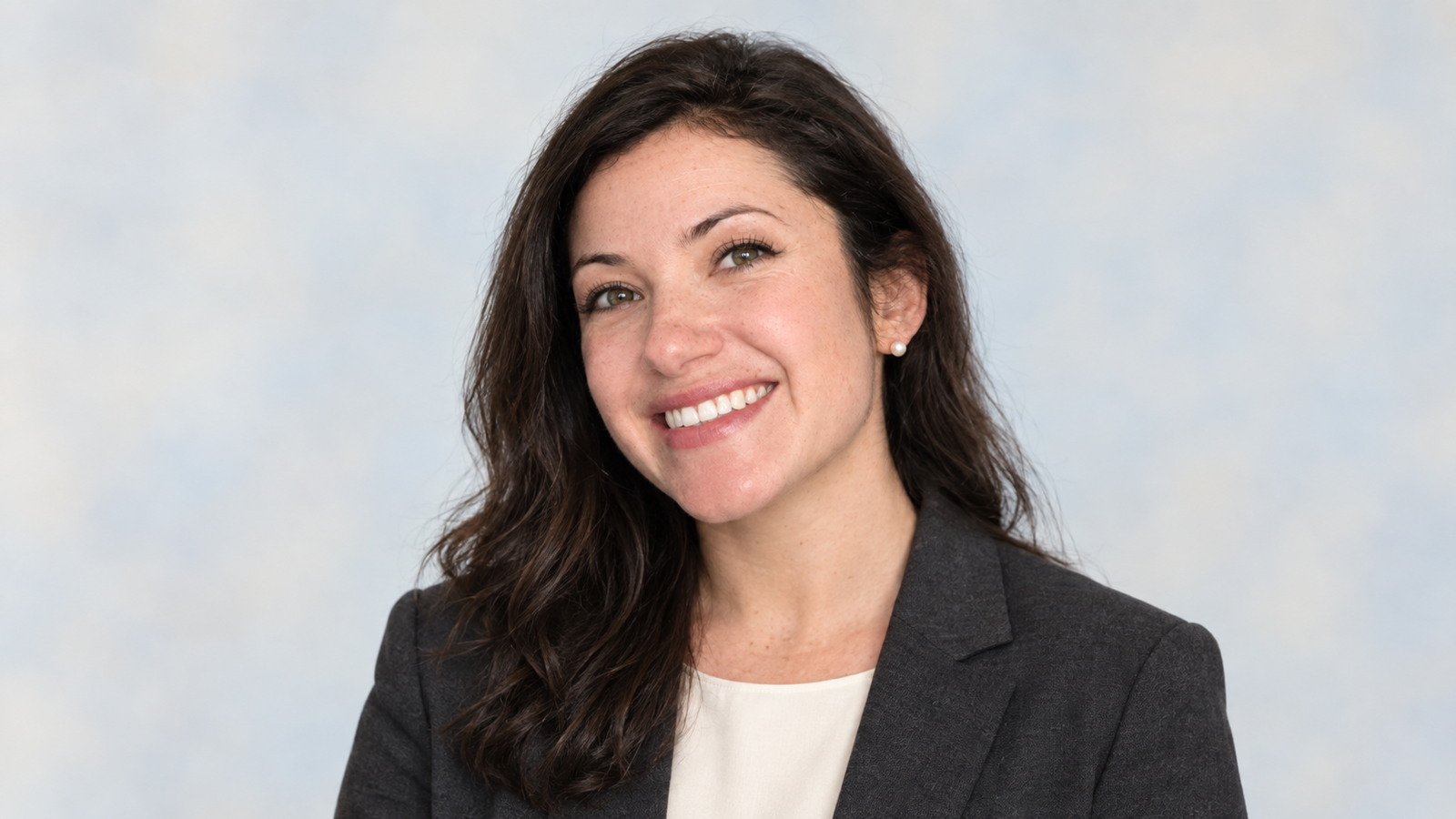
Created with ChatGPT Image Creator; reference: Michael Knowles’s 2018 wedding post. New portrait composition.
Alissa Mahler, who also publishes as Alissa Knowles, is a psychological-science researcher and university educator. Her work asks how adolescents’ expectations, impulse control, family experiences and environments relate to behaviour, particularly after contact with the juvenile justice system. She is also the wife of political commentator Michael Knowles. the published relationship identification. UCI’s archived student-researcher description.
Her documented career encompasses a UC Irvine doctorate, published studies and teaching at Arizona State University. The central thread is development: how young people change, how their circumstances matter and why one measure of risk cannot explain every adolescent’s future. UC Irvine’s graduate record. the Individual in Context study record.
Childhood connections and the move into psychology
Michael Knowles placed Mahler’s childhood in Bedford Village, New York, when discussing their relationship with Lila Rose in September 2023. He remembered meeting through the fifth-grade district orchestra; he said she remembered sixth-grade homeroom instead. He also recalled that they began dating in their junior year of high school, separated for college and later reunited. He described her studying in Maryland while he was in Connecticut. Michael Knowles’s September 2023 interview.
Mahler graduated cum laude from the University of Maryland, College Park, in 2012, with a psychology-and-history double major. her 2019 dissertation and CV.
Her Maryland research-assistant posts included the ADHD programme (2010–12) and Mind Perception and Morality Lab (2011–12), involving recruitment, protocols and participant testing. her 2019 dissertation and CV.
From NIH research to graduate study at UC Irvine
Her 2012–14 NIH postbaccalaureate fellowship in NICHD’s Child and Family Research Section involved longitudinal-study recruitment and managing adolescent-interaction coding, including assistant training. her 2019 dissertation and CV.
An early publication reflects that family-development background. In a 2016 paper with Justin Jager and colleagues, Mahler helped examine how adolescents’ own perceptions of parental rejection differed from the views shared with their parents. The study used reports from 161 families and followed adjustment over a year. Its contribution was methodological as well as developmental: it tried to isolate the adolescent’s individual perspective instead of treating disagreement with a parent as a single, undifferentiated problem. the original parental-perspectives paper.
The study found that those individual perceptions contained meaningful information about adolescents’ experiences. However, it did not establish that an adolescent’s perception was always an objective account of family events. Some associations also disappeared after accounting for earlier adjustment. Those qualifications matter when explaining this research as a biography: it was a careful investigation of measurement and development, rather than a claim that one family member’s account must always prevail. the original parental-perspectives paper.
APA’s November 2014 announcement names Mahler among nine recipients of the APAGS/Psi Chi Junior Scientist Fellowship. The programme supported early research experience and feedback intended to help recipients compete for larger grants. It is a specific early-career award, distinct from the academic degrees that followed. APA’s 2014 fellowship announcement.
Her CV records Phi Beta Kappa (2012), UCI graduate mentoring award (2015–19) and a developmental-science seed grant (2017–18). her 2019 dissertation and CV.
A master’s thesis, a doctorate and two publication names
At UC Irvine, Mahler’s work focused increasingly on adolescent development and juvenile offending. The Center for Psychology and Law’s historical student-researcher description identifies her as a graduate research assistant interested in adolescent development, juvenile delinquency and the development of antisocial behaviour. The page describes a stage of her training, not a present-day student appointment. UCI’s archived student-researcher description.
Her 2016 M.A. thesis in Social Ecology was titled Expecting the Unexpected? Expectations for Future Success Among Adolescent First-Time Offenders. Elizabeth Cauffman chaired the committee, with Chuansheng Chen and Jutta Heckhausen also serving. Using 1,166 males followed for a year after their first arrest, it considered both self-reported offending and re-arrest, alongside expectations about college, work and staying out of legal trouble. her 2016 master’s thesis.
The thesis found partial support for a two-way relationship between expectations and behaviour. Re-arrest was associated with changed expectations of staying out of trouble, but not with educational or occupational expectations. This distinction introduced an important question in her later work: the experience of an arrest and the behaviour that leads to it are not interchangeable measurements. her 2016 master’s thesis.
UC Irvine awarded her a Ph.D. in Psychological Science in 2019. Her doctoral dissertation, A Longitudinal Examination of the Relation Between Future Expectations and Crime, was chaired by Cauffman, with Heckhausen and Candice L. Odgers on the committee. This is the formal degree title; her research’s developmental focus should not be used to rename the qualification. UC Irvine’s graduate record.
Her CV explicitly dates her surname change from Mahler to Knowles to 2018, connecting the publication names. her 2019 dissertation and CV.
At UCI from 2014, her Development, Disorder, and Delinquency Lab work included field interviews, data analysis and training undergraduate assistants. her 2019 dissertation and CV.
Turning future goals into research questions
Mahler was first author of Aspirations, Expectations and Delinquency: The Moderating Effect of Impulse Control, published in 2017. Its contribution statement credits her with developing the study idea, running the statistical analysis and drafting the manuscript. That is a more precise account of her role than simply noting that her name appears on the paper. the 2017 aspirations study.
The study distinguished aspirations, how strongly someone values a goal, from expectations, whether they believe they can achieve it. Using 1,117 male adolescents in the year after a first arrest, it asked how those beliefs interacted with impulse control. The association between aspirations and later delinquency appeared among participants with stronger impulse control. The finding suggests that wanting a different future and being able to consider it while making an immediate decision are separate issues. The study relied on self-reports and a male sample; it was not an individual prediction tool. the 2017 aspirations study.
Expectations and achievement could reinforce each other
Her first-author Child Development paper, published online in October 2017 and in the journal’s November 2018 volume, followed 1,165 adolescents for three years after a first arrest. It examined expectations, offending and school grades, using repeated observations to study changes within people over time. the Child Development study.
The reported pattern ran in both directions: optimistic expectations were associated with improved grades and reduced offending, while improved outcomes were associated with stronger expectations. The authors therefore emphasised helping adolescents achieve their goals, rather than only telling them to think positively. For a reader outside psychology, the important point is the relationship between a belief and lived progress. The research did not simply divide teenagers permanently into optimistic and pessimistic types, and its statistical associations do not prove that a motivational intervention alone would cause the same results. the Child Development study.
Why home, school and neighbourhood mattered
Mahler’s collaborative work also examined where adolescents lived and learned. Individual in Context, led by Adam Fine and published in a 2017 journal volume, analysed 1,216 first-time male juvenile offenders. It considered whether impulse control changed the relationship between home, school and neighbourhood conditions and offending over the following six months. The author-contribution record specifically credits Mahler with statistical work and drafting. the Individual in Context study record.
Positive environments were more strongly associated with reduced delinquency among young people with moderate or high impulse control. Negative environments were associated with similar offending regardless of impulse-control level. In other words, the findings did not make individual skills or surroundings a complete explanation on their own. the Individual in Context study record.
A separate 2016 paper with Fine, Cortney Simmons, Chuansheng Chen, Robert Moyzis and Cauffman examined school attachment alongside variation in three dopamine-system genes. It used NICHD study data and reported school attachment as an important factor, with different gene–environment interaction patterns. It belongs in her publication history as work on the interaction between individual differences and context, not as a basis for claiming that a gene determines criminal behaviour. the school-attachment and genetics paper.
Adding mothers’ perspectives
Mahler co-authored a study with Caitlin Cavanagh and Cauffman that followed 317 mothers of first-time juvenile offenders over two and a half years. Published online in 2018 and in a 2019 Journal of Research on Adolescence issue, it found that mothers generally aspired to more for their sons than they expected would happen. the mothers’ expectations study.
Continued offending was associated with declining maternal expectations. The relationship also differed with the son’s age: when mothers perceived high delinquency, expectations were lower for younger sons than older ones. The study extended Mahler’s central subject beyond adolescents’ own answers by examining how family members adjusted their expectations as events unfolded. It did not treat a mother’s expectations as an unchanging trait or establish that mothers’ pessimism caused their children’s behaviour. the mothers’ expectations study.
Research under the Knowles surname
Her later work broadened the outcomes being studied. In Risky Sexual Behavior among Arrested Adolescent Males, published online in 2019 and in a 2020 journal supplement, Knowles and co-authors analysed 752 sexually active, justice-involved adolescent males. More optimistic future expectations were associated with consistent condom use, while stronger impulse control was associated with a lower likelihood of casual sex. the sexual-health study.
The distinction is important: the two psychological measures did not simply predict every outcome in the same way. This project moved from offending and school performance into sexual-health behaviour, while retaining the same interest in how young people think about the future and regulate immediate choices. It was an observational study of a specified group, not clinical advice or evidence about all teenagers. the sexual-health study.
Evading Detection during Adolescence, published online in 2019 and in a 2021 Justice Quarterly volume, investigated a different methodological problem. Some offending is detected and some is not. The paper examined factors associated with avoiding re-arrest, including resources relevant to evading detection, future expectations and intelligence. Parenting and neighbourhood disorder were not associated with re-arrest likelihood in its reported models. the arrest-avoidance paper.
This line of work is important to interpreting a criminal-justice record: an absence of another arrest cannot automatically be treated as an absence of illegal behaviour. Knowles was first author, working with Zachary Rowan, Paul Frick, Laurence Steinberg and Cauffman. The published account identifies her interest in the individual attitudes and psychosocial skills associated with adolescent delinquency. the arrest-avoidance paper.
Testing where protective factors do and do not apply
A Child Development study led by Simmons, with Knowles as a co-author, considered callous-unemotional traits alongside psychosocial maturity. It followed males after a first arrest and appeared in the journal’s 2020 volume. The paper assessed maturity through responsibility, temperance and perspective, rather than treating maturity as age alone. the original maturity study.
The expected protective pattern was not universal. Greater maturity was associated with less subsequent offending among adolescents with lower or average callous-unemotional traits, but not in the high-trait group. The authors explicitly noted male-only sampling, relatively minor initial offences and self-report limitations. The finding qualified the initial hypothesis: a useful developmental factor did not work the same way across every subgroup. the original maturity study.
Her collaborative record also includes the 2019 article A Life History Approach to Understanding Juvenile Offending and Aggression, with Simmons, Rowan, Steinberg, Frick and Cauffman. Together, these projects place her work within a continuing research collaboration on adolescent development rather than a series of unrelated topics. the life-history publication record.
Life expectancy as another kind of future expectation
In a paper published online in September 2021 and in a 2022 volume, Knowles and colleagues studied estimated life expectancy among 1,147 males after a first arrest. The research covered ages 14 to 21 through an accelerated cohort design, allowing examination of developmental change rather than a single age group. the life-expectancy paper.
Participants became more optimistic about their expected lifespan as they aged. Within individuals, increases in estimated life expectancy were associated with decreases in offending. The paper treated this as a possible direction for intervention research, but an association is not a demonstrated treatment effect. It also should not be described as a wholly independent sample from every earlier paper: several of these publications draw on the wider Crossroads research programme. the life-expectancy paper.
Connecting developmental science with juvenile-justice policy
Mahler’s 2018 UC Irvine Law Review contribution, How Developmental Science Influences Juvenile Justice Reform, was co-authored with Cauffman, Fine and Simmons. The authors are listed alphabetically and are explicitly credited with equal contributions. The article examined adolescent development in relation to culpability, legal competence and severe punishment, then discussed transfer to adult court and solitary confinement as areas for reform. the original law-review article.
This was a synthesis of developmental research and its implications for institutions, rather than another analysis of one participant sample. It shows a public-policy application of her academic field. The analysis extends her work from describing adolescents’ development to considering how institutions respond to it. the original law-review article.
University teaching and student supervision
At UCI, she mentored undergraduate researchers and developed online master’s course materials on violence, anger and psychopathology in 2017. her 2019 dissertation and CV.
UC Irvine records her initial post-doctorate placement as a lecturer in Arizona State University’s School of Social and Behavioral Sciences. ASU’s 2024–25 instructional-faculty list subsequently names Alissa Knowles as an assistant teaching professor in the School of Interdisciplinary Forensics. UC Irvine’s graduate record. ASU’s 2024–25 faculty record.
Her teaching can be described more concretely than an appointment title. ASU’s public syllabus for PSY514, Fundamentals of Forensic Psychology Research, names her as instructor and sets out a course in interpreting, analysing and evaluating research for legal and forensic audiences. It covers descriptive and inferential statistics, research methods and the limits of those methods. ASU’s public PSY514 syllabus.
The online course combines recorded instruction, practice questions, quizzes and data-analysis assignments. Students work with Excel and SPSS, and are asked to explain what their analyses mean. The syllabus links quantitative skills to a practical communication task: making research understandable to people who use it in legal policy and practice. This is evidence of her instructional work, without assuming that every standard course resource was personally written by her. ASU’s public PSY514 syllabus.
ASU’s spring 2023 commencement programme lists her as the director of Kiana Nicole Anderson’s forensic-psychology honours thesis on psychotherapy, drug-court programmes and recidivism in Arizona. The record adds a specific example of student supervision to her teaching history. It does not by itself establish the thesis’s findings or endorse its policy conclusions. ASU’s spring 2023 commencement programme.

Marriage, family and public appearances
Her acknowledgments thank parents Peter and Laurie, siblings Kayla and Adam, and husband Michael for their support. her 2019 dissertation and CV.
Mahler and Michael Knowles married in 2018. They have also appeared together at public events: a MediaPunch/Shutterstock caption identifies Michael and Alissa Knowles at the November 11, 2019 Los Angeles premiere of No Safe Spaces. the published relationship identification. the dated editorial photograph record.
In June 2024, Michael publicly announced the arrival of their third son. This establishes the family milestone without needing to publish the children’s identifying details or infer how Mahler balances parenting and professional work. his June 2024 family announcement.
Her relationship is part of her public biography, but her research and teaching have their own documented chronology. Academic papers do not establish her private political opinions, and a spouse’s public platform is not evidence that she holds an equivalent media role.
What is documented most recently?
The latest dated institutional appointment verified for this profile is ASU’s 2024–25 listing. It supports describing her teaching history through that academic year. A present-day appointment in October 2026 was not independently confirmed, so this profile does not turn an archived faculty entry into a current-employment claim. ASU’s 2024–25 faculty record.
Frequently asked questions
Are Alissa Mahler and Alissa Rose Knowles the same researcher?
Yes. Her CV documents the surname change in 2018. her 2019 dissertation and CV.
Did she earn a doctorate?
Yes. UC Irvine’s institutional record lists a 2019 Ph.D. in Psychological Science. That is separate from professional licensure to practise clinical psychology, which was not established for this profile. UC Irvine’s graduate record.
Did she go to Yale?
The documented undergraduate record is the University of Maryland, followed by graduate study at UC Irvine. No primary academic record inspected here supports a Yale degree.
What does her research contribute?
It distinguishes different future beliefs and examines how their relationships with behaviour vary across time, environments, family perspectives and individual characteristics. The work also shows why arrest records and self-reported behaviour need to be considered separately. the 2017 aspirations study. the mothers’ expectations study. the arrest-avoidance paper.
What are her age and net worth?
Neither an exact birth date nor a reliable personal net-worth figure was verified. Her documented degrees, publications and dated teaching appointments provide the firmer account of her professional life.
Prepared with AI assistance and checked against the linked public sources.