

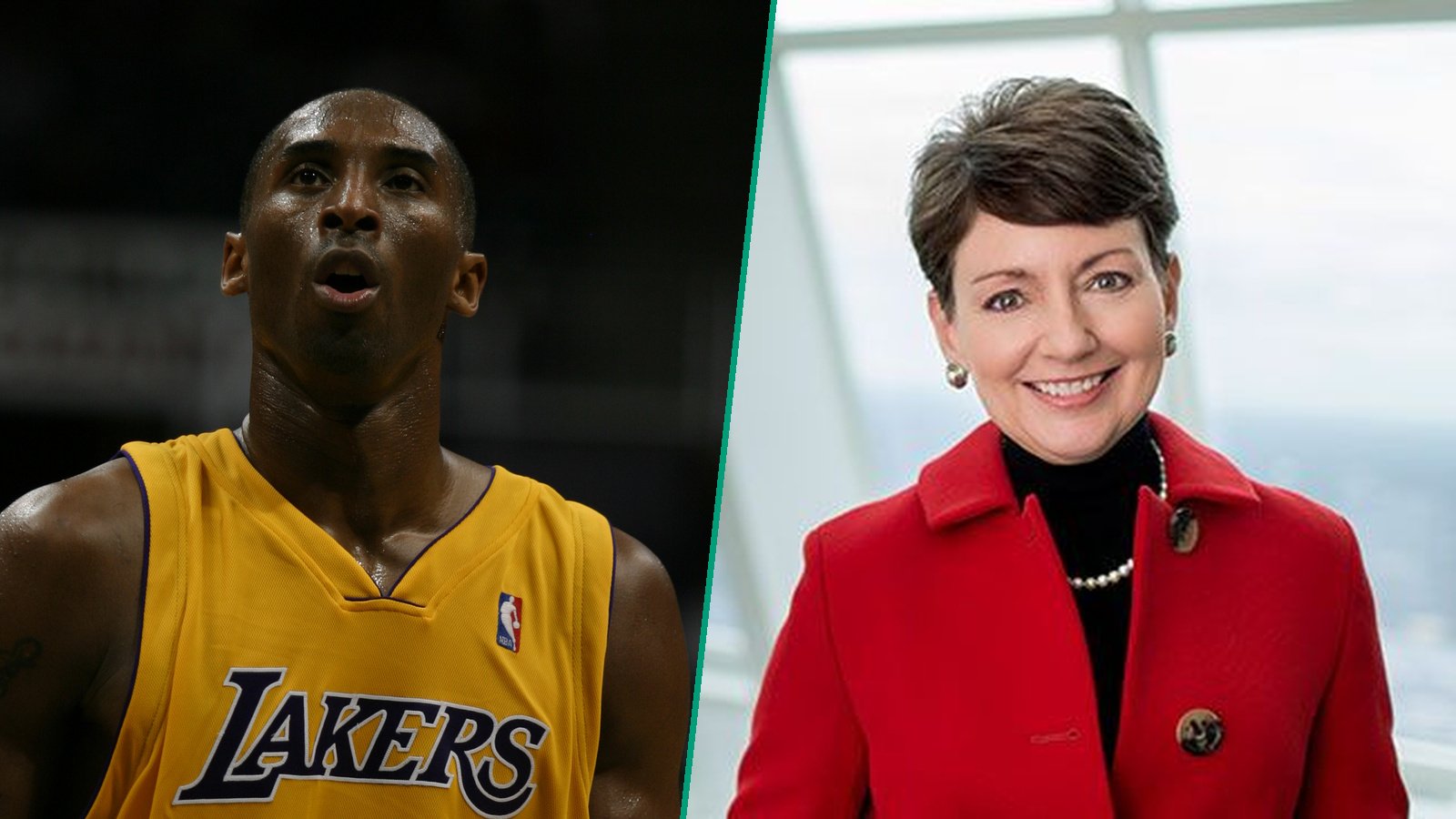
Kobe Bryant spent his entire 20-season NBA career with the Los Angeles Lakers, winning five championships before moving into filmmaking. Lynn Good built her career in accounting and energy, then led Duke Energy as chief executive from 2013 until 2025. Their best-known roles belonged to different worlds, but neither career can be understood through a job title alone.
Bryant’s story includes a childhood in Italy, championship-winning Lakers teams and an Oscar-winning animated film. Good’s includes senior finance and operating roles, a change in Duke Energy’s business portfolio and board appointments that continued after her retirement from the utility.
Kobe Bryant’s route to the Lakers
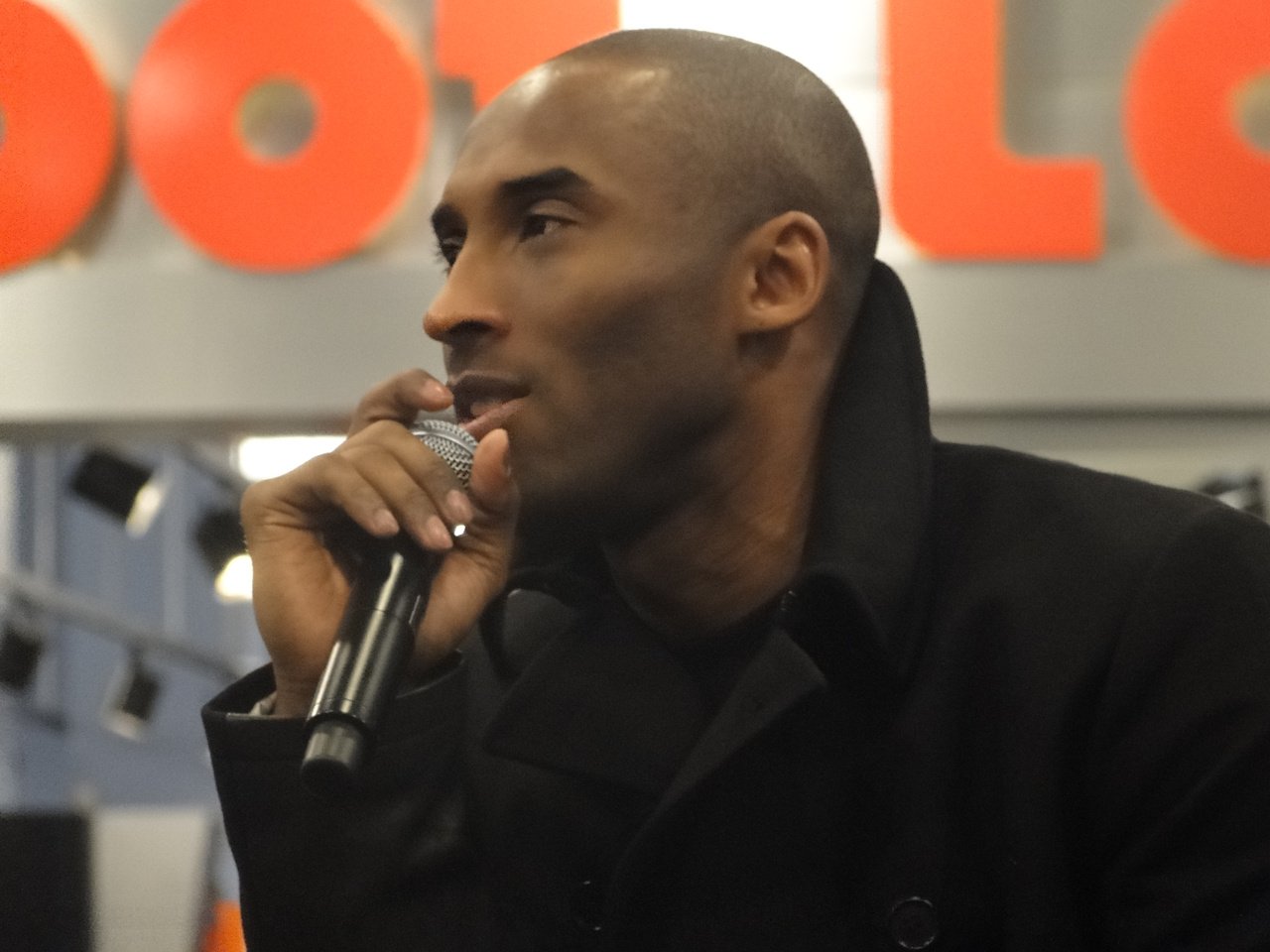
Bryant was born in Philadelphia on 23 August 1978. Much of his childhood was spent in Italy, where his father, Joe Bryant, played professional basketball after his NBA career. Kobe lived there from the age of six to 13 before his family returned to the United States.
His connection with American basketball continued while he was abroad. The NBA’s account of his early life describes his grandparents sending game tapes from the United States. Back in Pennsylvania, he attended Lower Merion High School and later entered the NBA draft without playing college basketball.
The Charlotte Hornets selected him with the 13th pick in 1996, then traded him to the Lakers. That distinction matters: Los Angeles was the only NBA team he played for, although it was not the team that originally drafted him. His professional career would remain with the Lakers through his final game in April 2016.
Five championships and a remarkable scoring career
Bryant’s five titles came in two runs. With Shaquille O’Neal, he helped the Lakers win three consecutive championships in 2000, 2001 and 2002. He won two more in 2009 and 2010, receiving the Finals Most Valuable Player award on both occasions. His regular-season MVP award came for 2007–08.
The NBA’s retirement summary records 33,643 regular-season points and 18 All-Star selections. Those figures describe sustained achievement across two decades. His eleven All-NBA First Team selections and nine All-Defensive First Team selections also show that his recognition extended beyond scoring.
Two individual games remain especially memorable. On 22 January 2006, Bryant scored 81 points in a win over the Toronto Raptors. Ten years later, on 13 April 2016, he scored 60 in his farewell appearance as Los Angeles defeated the Utah Jazz 101–96.
His international record adds another dimension. Bryant won Olympic gold with the United States in 2008 and 2012, taking his place in national teams as well as the Lakers’ championship history. He died on 26 January 2020 and belongs to the Naismith Basketball Hall of Fame’s Class of 2020.
How Dear Basketball extended his career
Bryant’s departure from the NBA became the subject of a creative project. He wrote a farewell poem, Dear Basketball, which was adapted into an animated short. Glen Keane directed and animated the film, John Williams composed the score and Bryant provided the narration.
The film follows a young Bryant’s ambition to play for the Lakers and his eventual acceptance of life after playing. Its subject is retirement, but its form brings together writing, drawing, music and performance. Knowing those contributions makes the award easier to understand: Bryant was part of a filmmaking collaboration built around his own experience of basketball.
At the 2018 Academy Awards, Dear Basketball won the animated short film category, with Keane and Bryant named as the recipients. The ceremony took place on 4 March 2018, less than two years after Bryant’s final NBA game.
This later achievement belongs alongside his sporting honours. Basketball supplied the story, while animation gave him another way to tell it.
Lynn Good’s path from accounting to chief executive
Good’s early career was in accounting. Before joining the energy industry, she worked in senior management and partner roles at Arthur Andersen and Deloitte & Touche. She joined Cinergy, a Duke Energy predecessor company, in 2003.
Her experience within Duke extended beyond finance. Before becoming chief financial officer, she led its Commercial Businesses organisation, with responsibilities covering non-regulated generation in the Midwest, international operations, renewables, corporate development and mergers and acquisitions. She became executive vice president and CFO in July 2009.
Duke announced her selection as president and CEO on 18 June 2013, with the appointment effective on 1 July. She succeeded Jim Rogers, who remained chair during the initial transition. Good later became chair herself in 2016.
Those dates explain why descriptions of her Duke career use different combinations of titles. President, CEO and chair were overlapping appointments with different start and end dates. Boeing’s biography of Good lists her Duke presidency as 2013–2024, her CEO tenure as 2013–2025 and her chair tenure as 2016–2025.
The change in Duke Energy’s business
An important part of Good’s tenure was Duke’s move towards a fully regulated utility business. A concrete milestone came with the October 2023 sale of its utility-scale Commercial Renewables business to Brookfield. Duke described the transaction as the final step in that transition.
The sale involved the unregulated business. It did not amount to Duke abandoning renewable energy. In the announcement, the company said it intended to invest in renewable generation within its regulated operations and make improvements to the electricity grid. It also said the sale proceeds would strengthen its balance sheet and reduce the need for additional holding-company debt.
This helps explain what Good’s leadership involved in practical terms: choosing which businesses Duke would own and where it would direct investment. In its January 2025 succession announcement, Duke also highlighted her work on relationships with communities and regulators, customer services and utility operations. These responsibilities place her career in the context of a company providing essential services, with financial and operational decisions closely connected.
What changed when Good retired in 2025?
Good’s time as Duke Energy’s chief executive ended on 1 April 2025. The company’s completed leadership transition announcement confirmed that Harry Sideris had taken over as CEO and joined the board. Ted Craver became board chair on the same date.
The two appointments separated the chief executive and chair positions that Good had held together. Sideris retained the presidency, a role he had already held since April 2024. Good retired from both her management and board roles at Duke.
Her work elsewhere continued. As of October 2026, Boeing lists her as a director since 2015, chair of its Compensation Committee and a member of its Audit Committee. Its biography also lists directorships at Caterpillar and Morgan Stanley. Her departure from Duke therefore marked the end of one major executive chapter, rather than the end of all professional activity.
Understanding the two careers together
Bryant’s milestones are closely tied to seasons, games, medals and film awards. Good’s are tied to appointments, business decisions and corporate governance. Both spent substantial periods with the organisations most associated with their names, then moved beyond their best-known roles.
Their NBA, film and corporate biographies do not identify a shared project or relationship between them. The useful comparison is in the individual career paths: Bryant took a personal sporting story into animation, while Good brought finance and operating experience to utility leadership and continuing board work.
Updated: 2 October 2026.
Photo credits
Featured photographs: Kobe Bryant: Sgt. Joseph A. Lee / U.S. Marine Corps, via Wikimedia Commons; public domain in the United States. Lynn Good: courtesy of Duke Energy; news-media-use permission, not a free licence. Both photographs cropped and combined as separate panels.

Inline photograph: Bryan Horowitz / SportsAngle.com, via Wikimedia Commons, CC BY-SA 2.0. Resized with the full composition retained; this reproduction remains under CC BY-SA 2.0.
