


David Lawler and Bruce Broussard have reached the top of major businesses through different kinds of experience. Lawler’s career runs through engineering, oil and gas operations and the development of Caturus. Broussard’s runs through finance, healthcare and, most recently, the interim chief executive role at HP Inc.
The interesting comparison is how those careers developed. Lawler has moved between companies while staying close to energy production and infrastructure. Broussard has crossed industry boundaries, taking experience from healthcare into a technology business whose board he had already joined. Their appointments also explain why older profiles can give different answers about where they work.
David Lawler: engineering before executive leadership
Lawler’s foundation was technical. He graduated from the Colorado School of Mines with a petroleum engineering degree in 1990 and completed an MBA at Tulane University in 2003. His early jobs included production engineering at Conoco and drilling engineering at Burlington Resources.
At Shell, he worked in engineering and operations management, including responsibilities for South Texas and Mobile Bay exploration and production assets. He later became president and CEO of PostRock Energy and executive vice president and chief operating officer at SandRidge Energy. These were different organisations, but the underlying work remained rooted in producing and managing energy resources.
Caturus’s biography of Lawler records his subsequent service as chairman and president of BP America from 2020 to 2023. He also led bpx energy, BP’s US onshore and midstream business. Those responsibilities covered both the operation of an energy business and BP’s wider representation in the United States.
The BHP acquisition in context
One substantial transaction during his BP career was BP’s purchase of BHP’s US onshore assets. Caturus credits Lawler with leading the $10.5 billion acquisition. BHP’s July 2018 sale announcement identifies the portfolio involved: assets in the Eagle Ford, Haynesville and Permian regions, held through Petrohawk Energy Corporation.
That detail makes the transaction more informative than the headline price alone. The purchase involved several producing areas and a corporate acquisition structure, rather than a single field or facility. BHP separately agreed to sell its Fayetteville assets to a different buyer, so the full value of BHP’s announced US disposals should not be confused with the amount attached to BP’s purchase.
For a career profile, this is a concrete example of the scale of business Lawler helped manage. It also connects his operating background with corporate transactions: acquiring assets and running them are related responsibilities, but they are not the same task.
From Kimmeridge Texas Gas to Caturus
On 25 June 2024, Kimmeridge Texas Gas appointed Lawler CEO, effective immediately. Kimmeridge simultaneously announced a further controlling investment in Commonwealth LNG, the Louisiana export-terminal project. The combination placed gas production and the planned export business within the same broader strategy.
The next important name change came on 7 August 2025. Kimmeridge announced that its holding platform, SoTex HoldCo, was being renamed Caturus. The upstream operations became Caturus Energy, formerly Kimmeridge Texas Gas, alongside Commonwealth LNG. Lawler became CEO of Caturus.
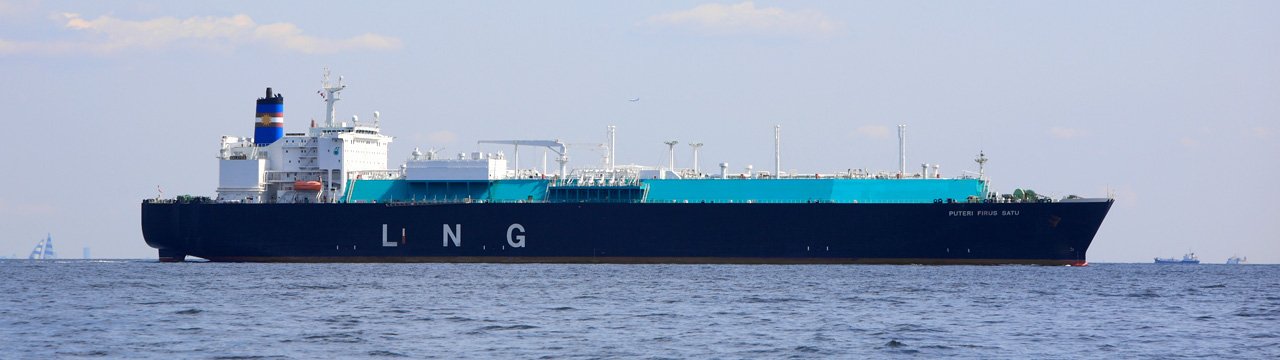
The Caturus platform announcement also reported the closing of Mubadala Energy’s investment, representing a 24.1 per cent stake. It described Commonwealth as a planned 9.5-million-tonne-a-year LNG export terminal near Cameron, Louisiana.
This explains the business logic behind the new role. Upstream operations produce the gas; an LNG terminal provides a route towards overseas customers. Bringing those elements together extends the business beyond production alone. The announced terminal capacity describes the project’s planned scale, rather than an amount already being exported.
The distinction between the parent platform and its operating businesses is useful when reading Lawler’s career history. “Kimmeridge Texas Gas”, “Caturus Energy” and “Caturus” refer to connected parts or stages of that development, not three unrelated moves between employers.
Bruce Broussard: finance, healthcare and technology
Broussard’s educational background is in accounting and finance. He earned his undergraduate business degree at Texas A&M University and an MBA in finance at the University of Houston.
His career at US Oncology included chief financial officer, CEO and board-chair responsibilities during an eleven-year tenure. After the business was sold to McKesson, he became president of its Specialty Pharmacy Division. His subsequent leadership of Humana lasted more than a decade.
HP’s executive biography also describes work in digital-health investment, including a venture-partner role at Define Ventures. This adds another dimension to his background: alongside running large organisations, he has worked with earlier-stage healthcare companies.
That history helps explain the breadth of his experience without making healthcare and computing interchangeable industries. Financial management, organisational change and technology adoption can recur across businesses, while the products, customers and operating requirements remain different.
How the Humana succession worked
Humana’s transition was a staged handover. Jim Rechtin joined as president and chief operating officer in January 2024, working alongside Broussard before taking over as president and CEO on 1 July.
The company’s May announcement also specified that Broussard would leave the board when the change took effect and continue as a strategic adviser. Those are separate roles: an advisory relationship after a transition does not mean an executive remains the company’s chief executive.
This is why a current description should call Broussard a former Humana CEO. The length of his tenure makes Humana central to his biography, but it should not obscure the later appointment.
Why Broussard’s HP title includes “interim”
Broussard had served on HP’s board since 2021 when he became interim CEO, effective 3 February 2026, following Enrique Lores’s departure. HP’s transition announcement said the board had formed a search committee and engaged an executive-search firm.
The appointment therefore combined a change in executive leadership with continuity at board level. Broussard was new to the CEO position, but not to HP’s governance. The company framed his assignment around advancing its priorities while it searched for its next chief executive.
HP’s leadership page continued to list him as interim CEO on 2 October 2026. Keeping that qualifier matters: removing it would turn a transitional appointment into a claim that HP had announced a permanent successor.
What the comparison shows
Lawler’s career illustrates progression within a sector: engineering and operations led to responsibility for larger businesses, acquisitions and an integrated gas platform. Broussard’s illustrates movement across sectors, supported by finance, executive management and board experience.
Their recent transitions also differ. Caturus expanded the scope of the platform Lawler led. HP appointed an existing director to provide executive leadership during a succession process. The useful comparison is therefore about the nature of their responsibilities and how they arrived at them, rather than a ranking based on job titles.
The company announcements describe separate careers and appointments; none identifies a joint venture or partnership involving both men. Read side by side, the biographies show two distinct routes to senior leadership, with the dates and organisational changes doing more to explain them than a generic list of leadership traits.
Updated: 2 October 2026.
Photo credits
Featured: Justin Cozart (CC BY 2.0); Rachel Waters at Waters Photography Studio / Humana (CC BY-SA 4.0). Cropped collage, CC BY-SA 4.0.


Inline: Tennen-Gas, CC BY-SA 3.0; unchanged.
